Showing posts with label Nature. Show all posts

Thursday, 5 October 2017

Unforgettable memories in Bario – Valley of the Winds


Earlier this year, I heard about WHEE's Bario: Growing Food, Sustaining Culture project which aimed to explore the agricultural systems in Bario. It was my first time signing up for a volunteering project on highland agriculture and cultural exploration. After submitting a written application and undergoing an online interview in June, my application was accepted. Seven volunteers comprising of six Malaysians and one Singaporean were selected for the trip.

During the trip itself, we were joined by Emmanuel, a university student who was doing an internship in Bario, and some tourists from Austria, Italy, and German, who lived in the same homestay as us. The laughter, jokes, and adventures made the trip wonderful and memorable. The leech-filled jungle hikes, muddy frisbee matches, paddy planting, talk series, cultural performances and games are unforgettable memories.

Group photo - The August batch of WHEE's Bario: Growing Food, Sustaining Culture project, WHEE alumni, tourists and local villagers playing a game of frisbee in the paddy field
Bario is also known as Valley of the Winds. It is located in the Kelabit Highlands, where the minority indigenous group has been living in for centuries. The Adan rice grown in this region is famous for its smaller grain size, sweetness, and tenderness when bitten, thus earning it the name “Bario Rice”. Besides that, a unique variety of pineapple can also be found here. It is sweet, juicy, tender, and does not leave an 'itchy' aftertaste.  Furthermore, the salt harvested from salt spring is not only good for food preservation but is also beneficial to one's health. All of these are traits unique to this region and may not be seen in other places.

Tepuq Ribed (second from left, holding the heart-shaped balloon) was my assigned farmer throughout the project
In this project, I was assigned to a farmer, Tepuq Ribed, to collect agricultural data related to paddy planting while helping her in the fields. Tepuq Ribed is a member of possibly the last generation of Kelabits to practise traditional paddy farming. The ageing farming community and younger generation are not keen on continuing this labour-intensive practice, and this has resulted in many paddy fields being abandoned. It is saddening to see older members of the community, especially the women, having to work alone in the fields every day. Nevertheless, Tepuq Ribed and some other farmers practise 'gotong-royong', where they work together in each other's fields. They were excited and happy when we, the younger generation, helped out in the planting. There were also a few tourists who joined us in the field, which brought out laughter and fun. 

Some tourists from Kuala Lumpur, Austria and Italy had joined us to learn and experience the Kelabit culture and traditional paddy farming practices
The traditional paddy planting process involves germinating the seedling in the nursery and then transplanting them into the paddy fields. The farmers bend forward to transplant the seedlings and retreat slowly, as if respecting nature, letting it take its course instead of fighting against it. Such care culminates in the strength of the paddy, where it would bend with the breeze but never uproot. This is akin to the Kelabits keeping the core values of their culture and ancestral knowledge intact while adapting to the tide of development. That is the reason why the one-cycle-per-year practice for the planting of Bario rice remains. It allows more time for the paddy to mature and develop sufficient resistance against unfavourable growing conditions and pest problems naturally, thus giving it its unique fragrance and sweetness.

Special delicacy - Pattaya Friend Rice with locally grown pineapple, apple, and passion fruit
I was exposed to the Kelabit culture through interacting with older villagers, learning the Kelabit language, dishes, and cultural practices. There is no formal codification of the Kelabit history and language and everything is passed down verbally, where stories are told from the earlier generation to the next. 

As the location of Bario is isolated from towns and cities, the Kelabits' lifestyle and diet are shaped by whatever is available to them through farming, hunting, and foraging. With the help of some external organisations, farming has been expanded to different vegetables, mushrooms, and even kelulut bees (stingless bees). Recently, Bario is experiencing rapid changes and development, such as  the introduction of 24-hour electricity supply via solar power and micro hydro, Internet access, better road and infrastructure, and the development of the ecotourism and agrotourism industries. All these are done in hopes of attracting the younger generation of Kelabits who have moved out to the cities to return to Bario.

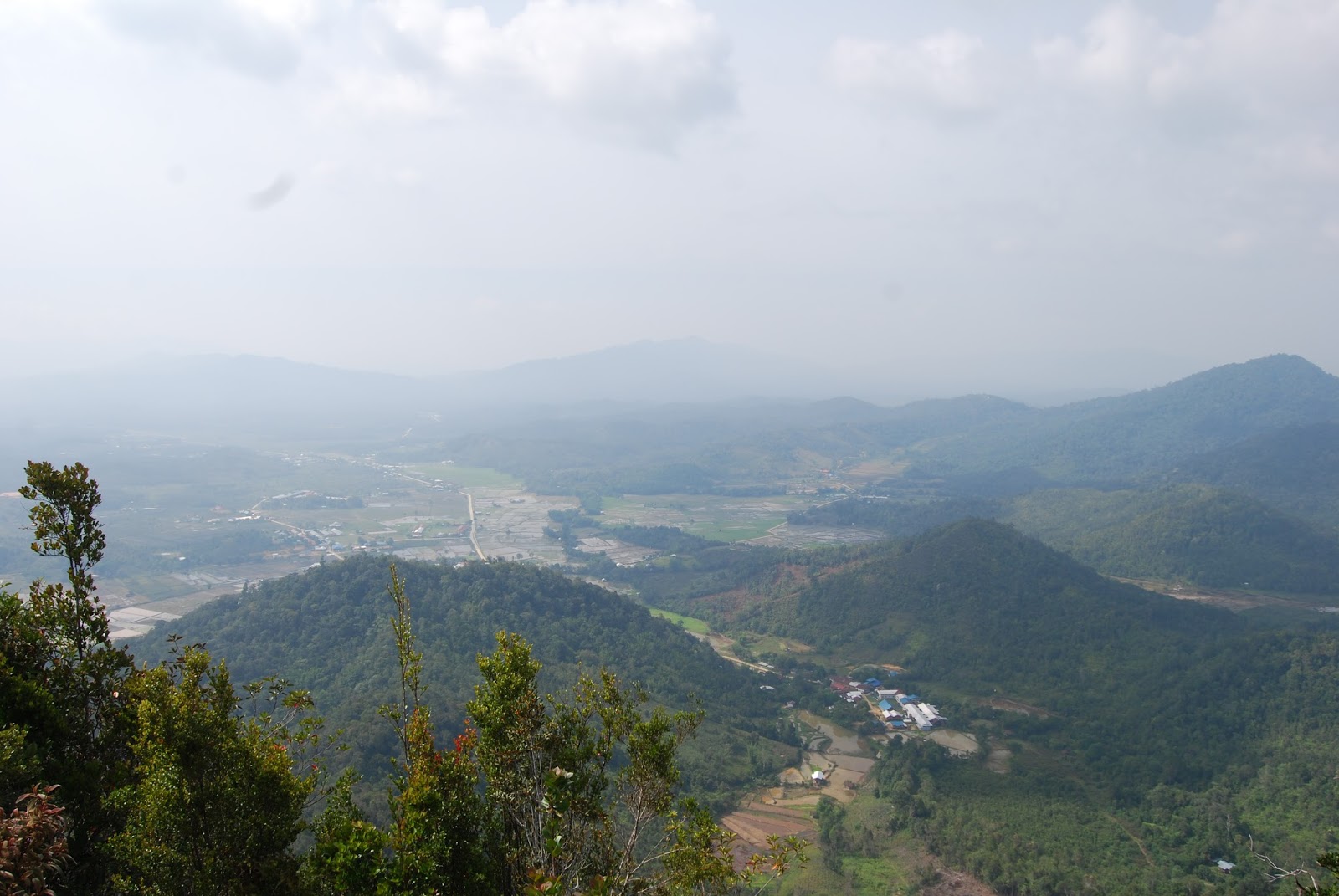
Bario village viewed from top of Praying Mountain
The chilly weather, beautiful scenery, friendly community, and slow-paced lifestyle in Bario have made this experience unforgettable. I hope to return to Bario during the harvest season and contribute to the farming community. 


Author: Yap Tzuen Kiat @ Michael @ Giat (Kelabit name)
Bario: Growing Food, Sustaining Culture, August 2017

Saturday, 24 October 2015

Bario Changed Me. I Can't Believe It!

You know that feeling when you hear someone say something like “This changed my life!” after attending a two-hour seminar? You'd be like “Huh?!” and wonder how genuine that statement is, really. Because those words have become too cliché for our liking; it has lost its meaning. 

Indeed, very few things cause a major detour or change in the trajectory of our lives independently, but a series of small events do. My three-week Bario trip created, for me, those minion series of events that has led to a change of mindset and behaviour as a leader and a human being, and I can’t believe it. Nevertheless, it is what it is. One of the changes in my life, inspired by the “Land of the Wind” (Bario) and the Kelabits, is my commitment to green living. Yes, you read that correctly. I am now committing to a green lifestyle. Here’s why:

As we flew across that great span of earth occupied by jagged mountains covered with fresh green vegetation, some mountains as high as the elevation of the aircraft we were flying in, I looked around me and what I saw amazed me. Like C. S. Lewis describes, “It was something quite different from ordinary life, and even from ordinary pleasure. Something as they would now say ‘in another dimension’.”


Greenery is not alien to me. I grew up playing in the bush, sometimes catching butterflies with my hands. Just beyond the fence of the estate where I lived, was an undeveloped land. But this idea of green living, which gained momentum in recent years hasn’t appealed much to me. The idea was set up by the rage over the global warming phenomenon, which I thought was only a big political fuss. I gave the notion of living green a lick and a promise, until I returned from Bario.

I was inspired by the lives of the Kelabits. They live a much richer life than many of us living in major cities. They live longer than most people in the urban cities. They live in better health than many urban people. They enjoy non-chemicalised (natural) food and fruits. Most inspiring is how they nurture nature, and know the value and usefulness of specific naturally occurring plant species.


For example, my Tepuq (translated as “respected elder” in English language), and her husband (Mr. Daud) are above 50. Yet, these were some of the young looking and agile few in Bario. They feed on the organic produce from their rich land and as a result, age slower and are much stronger. In a conversation, I heard that very few Kelabits get cancer, and those who do are exposed to the urban lifestyle more compared to those who don't. Isn’t that a message?


How would you imagine meeting the aunty of Mr Daud? Yes, she is still alive and strong. She works ten hours a day or more, just as most of them do. They eat their breakfast, lunch and dinner harvested from their farms the jungle. During my stay, we often went into the jungle to pluck vegetables for lunch. My favorite was tengayan. Also, their naturally-ripen pineapples are the sweetest I have eaten! You can’t get that in the city where I live in.


Every morning, I woke up to the crowing of hens, and the barking of dogs. I woke up to a cold, fresh, windy, clean, and quiet atmosphere, except for my super awesome batch mates chattering around the dining table. There is no need of air-conditioning units. My Tepuq says, “We have natural air-conditioning here in Bario.” As I stepped outside, in a gentle walk to Tepuq’s house, I am greeted with the smell of fresh dewy leaves, beautiful sunrise, the sight of growing paddy fields (rice fields), the beautiful view of the mountains, and the bright colors of various edible fruits. Tepuq lives in a house outside of the longhouse where we stayed. Along the walk from the longhouse to Tepuq Bulan's house, there are crops like tomatoes, chilli, durian, mata kucing, and lots more. Well, that distance is about the same distance between two blocks where I stay in Kuala Lumpur. But between those two blocks are restaurants and car parks. The difference is clear.


Now, the question is, must we go to Bario before we realize the need to live richly and healthily? The answer is No. This richness of life can still be attained by us if we commit to green living. It begins with three commitments like I did.

I was privileged to meet Mr. Matthias Gelber, an avid environmentalist, green entrepreneur, speaker and author who was voted the “Greenest Man on the Planet”. He is the author of “The Greenman’s Guide to Green Living and Working.” We had a wonderful discussion one night and during our five-hour climb and descent from the Prayer Mountain (more than 3,000 feet above sea level). After our discussion, I decided that when I return to Kuala Lumpur, I will make efforts to live a richer and healthier life in the little way I can, and to lead a lifestyle with low environmental impact.

I state this publicly through this post for two reasons. Firstly, so that you can join us on this journey. And secondly, so that we can help one another live up to this commitment.

Here are three behaviors I wish to uphold from henceforth. The first is of personal benefit, the second is of collective benefit (low environmental impact), and the third is of communal benefit (encouraging others to live a richer life):


1.      Personal: Consume less junk food and eat more fresh food. Be more particular about what I eat.

2.      Collective: Reduce my electricity bill by using less air-conditioning. Use fan or natural air as often as possible.

3.      Communal: Learn more ways to live a greener lifestyle and incorporate it into my practice as an engineer and a youth speaker/trainer.


Won’t you join us?


You can make this simple commitment with me today. Comment below this post if you mean it like I do, and we will create means to support each other. 

In the words of the Greenest man on the planet “Together we are stronger!”

Thursday, 8 October 2015

Prayer Mountain

Every mountain in Bario has its own story,

I got the opportunity to hike the famous Prayer Mountain in Arur Dalan. Sina Sarina was our community guide for Prayer Mountain. In my short stay, I hiked Prayer Mountain three times and each hike taught me something new.


We left our homestay, Sinah Rang Homestay at about 7.30am and started our ascent to Arur Dalan. One of my favourite things about Bario is the walk to Arur Dalan in the morning. I can’t describe the feeling, it is something you have to experience for yourself. It is difficult to explain the smell of the forest and the brisk morning air. Every time I go for a walk anywhere in Bario, it makes me fall in love with the place all over again.

Path to Arur Dalan

Testing Tourists: Kylie, Jia Qi and Hliang

During the hike, I came across many flora and fauna that I had never seen growing up in the city. If you are lucky like me, you get the chance to see hornbills flying overhead.

Wild Orchid
Pitcher Plant

Nuts that are used to feed the pigs

Some cool insect

Edible wild raspberry

My Sina’s favourite word throughout my stay in Bario: LEECH! Yes, you read it right. Every single day doesn't go by without her jokes about leech ever since she knew what it is in English. We were fortunate enough as Sina was always attentive over us. As soon as she saw a leech on our shoes, she would grab and flick it so casually before we get the chance to wake the jungle up with our screams.

Fearless Sina Sarina

Nearing the peak, there is a small hut that which is the church of Prayer Mountain. It was said that many years ago, the locals in Arur Dalan hiked up by just using farming tools while carrying their children in woven baskets every Saturday to pray.

Prayer Mountain Church 
Kylie, Jia Qi, Sina Sarina, Supang and Me

At the peak, all blood, sweats and tears shed along the hike felt were nothing compared to the site we beheld. The view is breath taking early in the morning with a sea of mist with islands of mountain peaks poking through the clouds. 


View of Bario Asal

If you are ever in Bario, never say no to a hike up Prayer Mountain. It is truly an experience to be had. 

Tuesday, 8 September 2015

Crazy About Plants

I had the amazing opportunity of being partnered with Agan Lina. He really taught me a lot of things especially about the history of Bario Asal and the plants in Bario.

Lunch with Agan Lina

Just by going on one trail with him, I managed to learn about more than 10 different types of plants and their uses. Here are some of the plants you can find in Bario just by walking around:
  • Daun Isip – Also known as the ‘plate of Bario’, the locals here use it to wrap their rice. In the city though, people actually just use them for aesthetics.


Nearly every family has a plantation of daun isip
Nuba layaq - Daun isip wrapped pressed rice
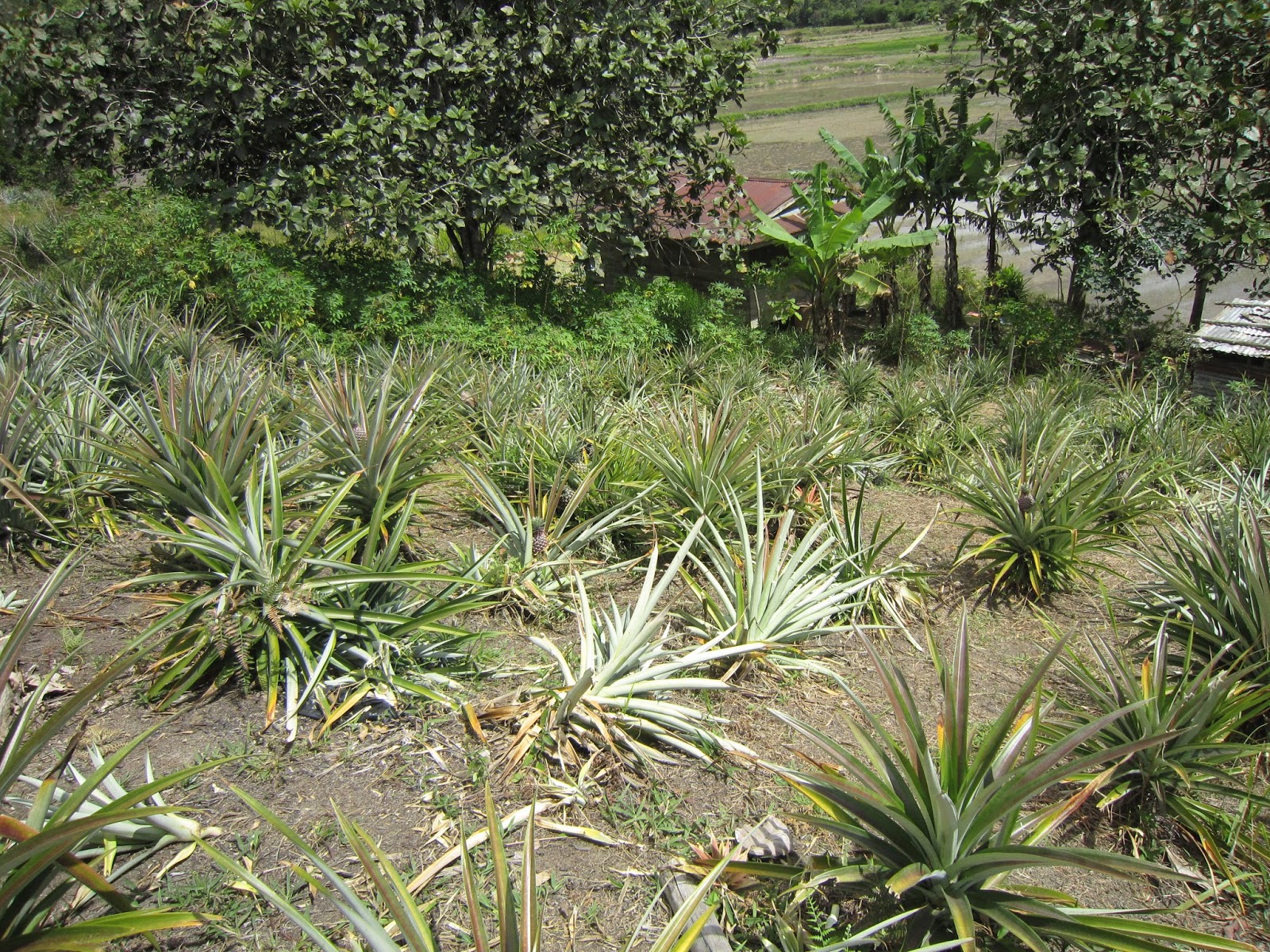
  • Pineapples – The pineapples in Bario are so sweet and juicy, I think I will never be able to enjoy pineapples anywhere else. Besides just eating the fruit as it is, the pineapples are also made into jam. The pineapple shoots can also be harvested to be eaten as a vegetable dish.


Ripe pineapple, this is bigger than my head!

So many pineapple plants, they are usually grown on a slope
  • Tapioca – People here grow/hunt nearly everything they eat, one of the most popular plants besides rice and pineapples are tapioca plants. They use the leaves as vegetables and the tubers to make snacks.


Tapioca leaves

Our strong man Jacky helping Tepuq Ribed harvest the tapioca


  • Daun Keladi (Yam) – The people in Bario do not eat these yam leaves but instead feed them to the pigs. The leaves are water proof so on a rainy day, picking up a large enough leaf will keep your head dry.


It's waterproof and quite fun to play with!

They grow in wet areas and are everywhere in Bario


  • Bunga Si’Ang (Rhododendron) – Grown nearly everywhere in Bario. Not only is it pretty to look at, the leaves of the plants can be crushed and mashed to treat bee stings. It is said that the flowers can be boiled to make some herbal medicine.


Pretty flower and useful too!

They grow by the road and are quite common

  • Temar – The leaf of this plant is really strong. Some locals actually use the leaf to tie their bundles of daun isip, some even weave the leaves together to make straps for their basket bags. What’s more surprising is that this plant actually has fruits that are just slightly smaller than almonds but the insides are like dragon fruit flesh, white with black seeds. They were really tasty.
Daun Temar


  • Wild raspberries – These raspberries just grow by the roadside and are really delicious, not too sour. It’s a pity though, these raspberries are sort of neglected and now not used as much.


I always get excited when I see ripe raspberries by the roadside in Bario


  • Bario ‘asparagus’ – This plant grows in wet areas. The leaves are not edible but the stalk is. After plucking all the leaves, what remains is the stalk that looks and smells similar to asparagus.


Just randomly growing at wet areas


It really does look like an asparagus after the leaves are plucked


  • Bamboo – There are three different sizes of bamboo planted in Bario. Small, medium and giant. The shoots of the small bamboos are really tender. The small and medium bamboos are used to make small bridges. The giant ones are used as building materials. You will find that bamboos are planted everywhere in Bario, this is because the bamboo actually help prevent soil erosion.
Bamboo located, but pandas not :(


  • Tenem – The seeds of this plant are highly sought after by companies because they can be distilled and used as aromatics. The juice of the seeds are natural insect repellants. They mostly grow wild in Bario. The locals also use the seeds to cook fish soup.


Natural insect repellent


It's quite hard to locate unless you know that's what you are looking for


There are many more plants to be seen in Bario and it’s really interesting to learn about them. I cannot thank Agan Lina and the other tepuqs enough for teaching me about Bario and the plants there. I never thought I would enjoy learning about plants this much. Just by going on one trail, I learned so much, I wonder how much more I could have learned if I spent more time in Bario.


Hliang (Innu)

Tuesday, 5 August 2014

Capturing the explosions in my heart

Today is the fourth day of my stay in Bario, Sarawak. It’s the first time I’ve been away from home alone. Come to think of it 16 days is pretty long for a first timer. Somehow, time passes slower here and I feel like I've been here for a week already.

Its really mind-blowing the number of things you can pick up if you’re observant. Just living in Bario can teach you many lessons. Peace, gratitude, love, beauty, a sense of community, connectedness, teamwork.

Last night, when the electricity in the longhouse was cut and we were talking around the dinner table lit by candles, Rhonwyn asked us if we would like to come along to Aunty Nicole’s house to learn to make “Senapih” and to help prepare pineapples for some media who were coming the next day.

Tepu Uloh busy making senapih.

We walked to Aunty Nicole's house. That was the first time I saw the beauty of the night sky at Bario. It was also my first time seeing so many stars lighting up the sky. The view was amazing. Throughout my short life of 17 years I have never seen anything like it, and the beauty of it really took my breath away. We stopped and stared at the sky with many ‘oohhs’ and ‘ahhhs' while I just stared, in awe of its beauty. And there were little explosions in my heart.

From young, I had always been moved by nature. When adults asked me about my ambition when I was young I would always answer scientist, but in my heart I always pictured myself in the middle of a jungle. Although I didn't really have an idea what I was doing there, but I loved that picture. My love for nature has always driven me to join the mission to save Mother Earth. But you can't do anything passionately if you’re not inspired. And I think Bario was just the inspiration!
Here, the people live side-by-side with nature. Animals such as ducks, chickens, dogs and cats wander around peacefully. The hills and mountains surround the village in every direction you face. The huge hills and mountains, the stretch of paddy fields, they fill me with the peace and love that I treasure.

Nature is so precious and sometimes we don’t realise the extent of our actions that hurt mother earth. We continue to just take what we want from the earth without pausing to think of giving back to mother nature. We cut down trees for development, we dig the ground for minerals and we exploit earth of all its resources and enjoy its monetary blessings. But we don’t pause to think, when all the trees are cut down, all the animals are dead, the water poisoned, and the air unsafe to breathe, will money keep us alive?

Sometimes, I think it takes one to lose something before he or she can wake up to appreciate what he/she has. It may not be a bad thing that nature in Kuala Lumpur has been compromised with its rapid development. We can use it as a lesson. To move on; to start anew; to heal our country, the world and the environment. It is important that we realise the fate of the world and the environment lies in our hand. 

We are the change. What we do now determines how the rest of humanity live in the future. For a nation to develop, industrialization and construction might be necessary but there's always a better way. A third way: to live and evolve. So let us keep nature and the environment in our thoughts always as we progress!


Christine